A disclosure first: DeepStack is built with Anthropic's models. The critics' case comes first, OpenAI is held to the same ruler where its investors' filings allow, and the text was reviewed by another company's model before publication. Anthropic had no part in it.
Start with the money Anthropic says it has. In the first half of 2026 it sold $110.4 billion of preferred stock. Google bought $20.0 billion of it and Amazon $10.0 billion, by the notes to the registration statement it filed on Oct. 26. Beyond the cash, the filing describes four lines it can still draw: $20.0 billion from Google, $15.0 billion from Amazon, $42.0 billion of notes from Broadcom that may be used only to pay rent on Broadcom equipment, and a commitment from AMD to buy up to $5.0 billion of stock as its GPUs are deployed.
Add it up, by DeepStack's count of the prospectus, and the four counterparties DeepStack groups as sellers account for at least $112.0 billion, or 54%, of the $207.4 billion the company raised in the half or can still draw. Counting cash equity alone, the share is 27%, $30.0 billion of $110.4 billion; the lines carry the rest, each under its own conditions. The rest is $80.4 billion of shares bought by other investors and a $15.0 billion revolving credit line from banks. The 54% is a floor. The filing says Amazon, Google and Microsoft have all made significant equity investments, and Microsoft also sells Anthropic compute, but it gives no 2026 figure for Microsoft; about $6.7 billion of non-voting Series G-2 shares and part of $19.5 billion of non-voting Series H-2 shares went to buyers it does not name. A further line of up to $10.0 billion from August 2025, also only for rent under an equipment lease, has a lender the filing does not name and ends at the listing, so it sits in neither column. Anthropic itself names the dependence. Part of its build, the prospectus says, has been funded or supported by capital or credit support from "certain of our CSPs and chip partners," and reducing that reliance depends on financing from independent sources on its own credit.
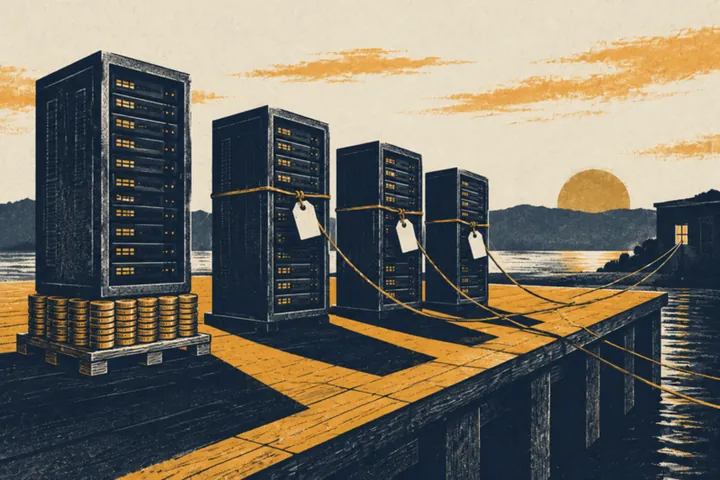
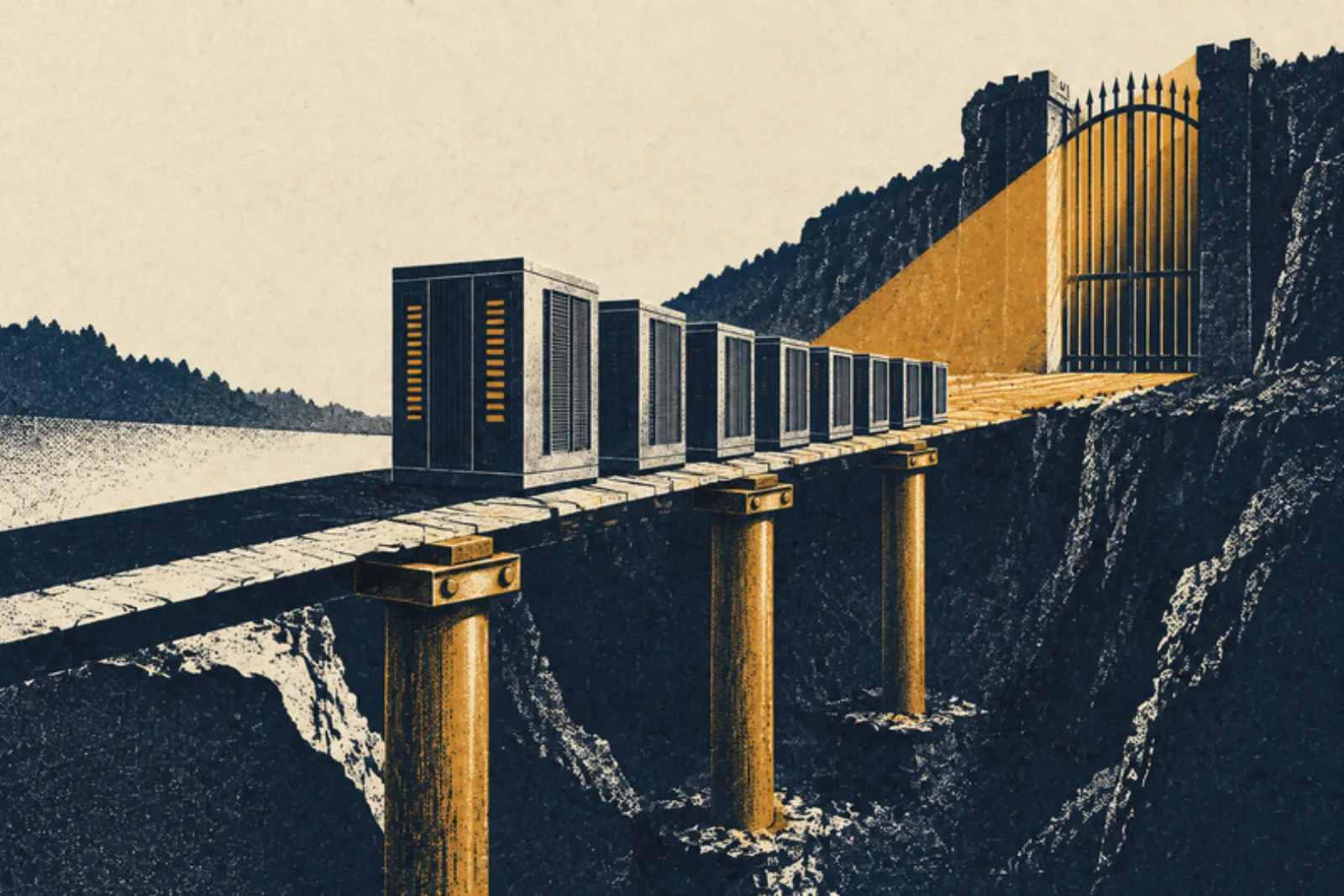
Broadcom has promised to cover the financiers behind two fleets of AI racks leased to a customer: up to about $29 billion on a backstop set in June, by its quarterly report, and up to about $43 billion on one set Oct. 26, by its current report. If the customer defaults on the lease, Broadcom pays the gap between 72.5% of what is owed and what the racks fetch. The 8-K gives the maximum as about $43 billion and no lease balance behind it. Broadcom's filings name no customer, but Anthropic's prospectus says Broadcom assigned part of one of its master equipment leases with Anthropic to a third party in the second quarter, which fits the June backstop. The announcement of the second, by Bank of America, Blackstone, Citi and Morgan Stanley and posted by Broadcom, names Anthropic and a $63 billion financing, with Blackstone on the second lien and Broadcom's support equal to the first-lien portion. The financiers put up the cash; the chip seller carries the risk of a default.
Part sixteen found Nvidia holding the paper on its customers' demand. DeepStack read 120 sources by 51 voices and verified 62 agreements and 34 disagreements after review, 15 of them direct contradictions. The count is lopsided: one writer accounts for 15 of the 34, mostly on the optimistic side and often in pairs that turn on model rankings more than on who pays. The voices below are weighed by date and by what they read, not by how often they appear.
The sellers pay for it
In his Oct. 27 note, the day after the filing, Michael Burry traced each investment back to the investor: every dollar Amazon and Google put into Anthropic returns to them as compute, about $110 billion to Amazon against roughly $18 billion invested, and $114.5 billion to Google against roughly $23 billion. He counted about $41 billion of the $141 billion Anthropic has raised over its life as coming from the two clouds, with $35 billion more of their lines undrawn. The contract figures are the filing's: at least $110.0 billion with Amazon from May 2026 to April 2036 and at least $114.5 billion with Google from April 2026 to July 2033, regardless of use; the amended filing of Nov. 10 puts the Google figure at about $121.3 billion.
Nathaniel Whittemore, on The AI Daily Brief of Oct. 11, called circular funding the concern that has persisted from last year: the hyperscalers' backlog leans on a couple of buyers, the labs.
The exposure runs through the chip makers' books as well. Aurelion Research, in a note of Oct. 22, estimated that OpenAI and Anthropic account for about one in five dollars of Nvidia's sales this fiscal year, and pointed to Nvidia's guarantee of up to $105 billion for an Ohio campus leased to OpenAI, which Nvidia's quarterly report confirms. Steve Eisman, on Oct. 18, worried that about 70% of Nvidia's receivables came from five customers while the labs' own accounts stayed hidden. JunkBondInvestor, in a credit weekly of Oct. 12, made the bond market's version: issuers of AI-linked high-yield debt own different assets, but their demand comes from the same few customers.
Nvidia invests as well: in the six months to July 26 it paid $42.4 billion for equity securities, listed shares included, against $1.2 billion a year earlier, and had $25 billion more committed. Its report does not name them; Anthropic's amended filing of Nov. 10 names one buyer to come, with Nvidia agreeing to buy about $10.0 billion of Anthropic's stock at the offering price.
The outside money is arriving
The other side starts from the same filing and reads the cash. Ren, on Oct. 28, noted that Anthropic held $131.7 billion in cash and short-term investments at June 30. The filing confirms the $131.7 billion and a GAAP operating profit of $974 million in the second quarter, on revenue of $11.6 billion, after a loss of $1.67 billion in the first. The amended filing of Nov. 2 puts the cash and short-term investments at $131.9 billion on Sept. 30. Against the $430.6 billion of fixed minimums Part twenty-two counted, about $65.8 billion a year on a straight line and owed regardless of use, the cash covers about two years.
Before the filing, Gaetano argued on Oct. 21, that a successful $100 billion raise would strengthen the customer behind many suppliers' expansion plans. After it, on Oct. 26, he read the disclosures as good for the AI trade: an operating profit in the second quarter even after stock-based compensation, and growth spreading beyond the largest customers.
Michael Spencer, on Oct. 14, counted $122 billion put into Anthropic by private investors before the listing, Google's and Amazon's money included. A guest analyst writing in his AI Supremacy on Oct. 28 argued that listing first, with a $100 billion start for compute ahead of an expected slowdown, is the right timing. Tim Culpan, on Supply Chained of Oct. 13, gave the reason order matters: whoever lists first, likely Anthropic, gains an advantage, and whoever goes second has a problem, because the first listing soaks up the cash investors have to spend.
The filing adds one fact for this side: a $15 billion secured revolving credit line from banks, agented by Morgan Stanley Senior Funding and enlarged in September from $3.25 billion, which had no borrowings on June 30. It is credit in Anthropic's own name, which is what the prospectus says it wants more of.
Only revenue can pay the bill
Mia Silverio, at Prof G Markets on Oct. 28, wrote that listing in 2026 lets Anthropic sell the asset-light version of itself, and that once its lease payments begin its statements will show an overleveraged startup with high costs and no direct line to many customers.
Ben Bajarin, on The Circuit of Oct. 26, said that labs renting other companies' infrastructure carry a cost basis tied to market rates that an owner such as Meta does not. Alex Kantrowitz, on his Big Technology podcast of Oct. 16, said the reported target of $100 billion of annualized revenue by year-end would need growth to speed up, not slow. Oguz Erkan, in Capitalist Letters of Oct. 21, put the concentration, by his reading of customer data, at almost 80% of the two labs' revenue from 1% of customers.
Where the voices meet
The raise is cash in hand. Part of it is the suppliers' own, coming home.
Gaetano's $100 billion raise, which would steady the suppliers, met Burry's accounting of the same money six days later, and the review found that Burry narrows the claim rather than refuting it. The raise is cash in hand. Part of it is the suppliers' own, coming home. The same day Burry added that the circle among Anthropic and its partners can look like security on the way up but leaves the whole system badly exposed on a pause or on the way down, as vendor financing did in the telecom build of 1998 to 2002.
Ren's cash pile met Steve Eisman's Oct. 30 note, which says the third quarter is what counts: sequential growth in the first two quarters, 135% and 147% by his count and 132% and 144% by the filing's quarterly table, rode a token boom he says ended this summer, followed by price cuts. The amended filing of Nov. 2 gives the third quarter: revenue of $17.0 billion, up 47% on the second, and an operating loss of $567 million, with about $600 million of revenue lost to price reductions. Whittemore's case that the bubble talk has matured met Burry's count of commitments at more than 20 times trailing sales. Spencer, on Oct. 27, wrote of both sides of it: a path to profit in the first-half numbers, with the cost of compute the open question and the long-term commitments heavy.
OpenAI files nothing of its own, so its investors' filings are the ruler. Amazon's quarterly report for the quarter to Sept. 30 shows $50.0 billion paid for OpenAI's Series C preferred stock in 2026, and Amazon also sells OpenAI cloud capacity under a contract expanded by $100.0 billion over eight years. Microsoft's report for the same quarter gives its holding as about 24% on an as-converted basis, by the equity method, at Sept. 30. The independent share of OpenAI's money is not public, and DeepStack does not estimate it.
DeepStack's view
DeepStack's view is that until the listing, the companies that sell Anthropic its compute are its largest backers, and the listing is the event that can change that. By the house's arithmetic ($112.0 billion less $95.4 billion, counting the bank line), a primary offering above $16.6 billion of new money would put the independent capital the filing names ahead. The amended filing of Nov. 10 sets a range of $70 to $78 a share for 801.4 million new shares, about $56.1 billion to $62.5 billion before fees, so an offering in that range would do it; where it prices is the question of Part twenty-two's tests. The same listing brings the sellers back: Google, Nvidia, AMD, Broadcom, Micron, Microsoft and TSMC agreed to buy $26.0 billion of stock at the offering price, and Google's $10.0 billion and AMD's $2.5 billion of it come out of lines counted above. A listing would not touch the contracts of at least $110.0 billion with Amazon and $121.3 billion with Google, which Burry reads as the clouds' money coming home, nor Broadcom's backstops.
The Call is split, conviction two out of five, because its tests read who finances the lab and none reads the bill. It rests on what the tests can see: whether Nvidia keeps paying for equity in its ecosystem, whether Broadcom adds a backstop, whether Anthropic lists by year-end and whether it draws on its suppliers' lines.
1. Nov. 17: Nvidia's purchases of equity securities for the nine months to Oct. 25: $50.0 billion, $55.0 billion or $60.0 billion or more? Six months: $42.4 billion. Date: Nvidia's announcement. 2. Dec. 9, with the annual report after it: Do Broadcom's backstops on AI-rack leases exceed $80 billion in its 10-K? Today: about $72 billion. 3. Dec. 31: Is Anthropic's final prospectus on EDGAR by year-end? 4. Filings to March 31, 2027: Does Anthropic issue notes or shares under its Google, Amazon or Broadcom lines in the second half of 2026? The prospectus expects none before the listing.
What would flip the Call: a listing by year-end with no draw on the suppliers' lines in 2026, a Broadcom annual report with no backstop that takes the total past $80 billion, and nine-month equity purchases at Nvidia under $50.0 billion would together mean the sellers no longer finance the lab; the bill would remain. A draw by Anthropic on a supplier's line after it lists would mean the sellers are still the lenders after the listing.
The numbers
Who put up Anthropic's money
Equity raised in the first half of 2026 plus financing available and undrawn, by source, $ billions
- Google40.0 $B
- Amazon25.0 $B
- Broadcom42.0 $B
- AMD5.0 $B
- Other investors80.4 $B
- Banks15.0 $B
Source: SEC EDGAR, Anthropic Form S-1 filed Oct 26, 2026 (Series G and H financings; note purchase agreements with Google, Amazon and Broadcom; AMD agreement; revolving credit facility), read Nov 1, 2026; Amazon 10-Q for the quarter ended Sep 30, 2026; DeepStack arithmetic
The DeepStack Call
The sellers lend until the listing
DeepStack's view is that until Anthropic lists, the companies that sell it compute are its largest backers: at least $112.0 billion of the $207.4 billion it raised in the first half of 2026 or can still draw, 54%, by DeepStack's count of its prospectus. A listing can change that balance. It would not change the cloud contracts of at least $110.0 billion with Amazon and $121.3 billion with Google, nor Broadcom's backstops of about $72 billion.
What to watch
The dated tests this Part set
- Nov 17, 2026Nvidia's purchases of equity securities for the nine months to Oct. 25: $50.0 billion or more, after $42.4 billion in six months.pending
- Nov 17, 2026The same Nvidia figure: $55.0 billion or more.pending
- Nov 17, 2026The same Nvidia figure: $60.0 billion or more.pending
- Dec 9, 2026Broadcom reports Dec. 9; its 10-K, which follows, puts its AI-rack backstops above $80 billion, against about $72 billion.pendingQuestion →
- Dec 31, 2026Anthropic's final prospectus on Form 424B4 is on EDGAR by December 31, 2026.pendingQuestion →
- Dec 9, 2026Anthropic issues notes or shares under its Google, Amazon or Broadcom lines in the second half of 2026.pendingQuestion →
23 sources cited
- SEC EDGAR - Anthropic, PBC, Form S-1, October 26, 2026
- SEC EDGAR - Anthropic, PBC, Form S-1/A (Amendment No. 1), November 2, 2026
- SEC EDGAR - Anthropic, PBC, Form S-1/A (Amendment No. 2), November 10, 2026
- SEC EDGAR - Broadcom Inc., Form 10-Q for the quarter ended August 2, 2026
- SEC EDGAR - Broadcom Inc., Form 8-K, October 27, 2026
- Part sixteen - The seller holds the paper
- The AI Daily Brief, Oct. 11, 2026 (episode on five open questions shaping AI), part 1
- his Oct. 8 show - The AI Daily Brief: The Most Important Trends in New AI Products (2026-10-09), part 1
- note of Oct. 22 - Field Trip: AI Has to Be Seen to Be Believed
- SEC EDGAR - NVIDIA Corporation, Form 10-Q for the quarter ended July 26, 2026
- credit weekly of Oct. 12 - Credit Weekly: Tightening by Proxy
- Oct. 14 - Is Meta Muse Too Good to be True?
- Oct. 28 - How to use Claude AI for Investing and Equity Research
- Supply Chained of Oct. 13 - Supply Chained: Anthropic IPO: Parsing the Prospectus Leak Reports (2026-10-13), part 2
- Prof G Markets on Oct. 28 - Anthropic’s Numbers May Never Look This Good Again
- The Circuit of Oct. 26 - The Circuit: Micron's Roadmap, Meta's AI Infrastructure, and NVIDIA's Supply Chain Mastery…
- Big Technology Podcast, episode on the Anthropic IPO, October 16, 2026
- Capitalist Letters of Oct. 21 - CoreWeave: It’s Not Dying, Not Anytime Soon
- Oct. 27 - Anthropic S-1 & Datacenters are Politically Unsustainable in 2026
- SEC EDGAR - Amazon.com, Inc., Form 10-Q for the quarter ended September 30, 2026
- SEC EDGAR - Microsoft Corporation, Form 10-Q for the quarter ended September 30, 2026
- NVIDIA - NVIDIA Sets Conference Call for Third-Quarter Financial Results, October 28, 2026
- Bank of America, Blackstone, Citi and Morgan Stanley (posted by Broadcom) - $63 Billion Financing Structure in Partnership with Broadcom, October 26, 2026
Text, numbers, Call and tests from the DeepStack engine, data as of Nov 23, 2026. Analysis and opinion, not investment advice.